
Importance of Vehicle Inspections

Importance of Vehicle Inspections

Safety is the most important and obvious reason to inspect your vehicle. A vehicle defect found during an inspection could save you problems later. You could have a breakdown on the road that will cost time and dollars, or even worse, a crash. Federal and state laws require daily inspection by the driver when the vehicle is in use, and if you fail to do a pre-trip inspection, a DOT inspector can place your vehicle out of service. So why risk your life, or the life of another, in an unsafe vehicle?

Pre-Trip Inspection: The first thing a driver should do when beginning a trip is to review the Driver Vehicle Inspection Report from the previous day. If there were defects noted, you should verify that the DVIR has been signed by a mechanic certifying that either the defect was repaired, or the defect does not affect the safety of the vehicle and the repair was unnecessary. If the previous day’s DVIR did contain a defect, you must sign the report to indicate that you have reviewed it, and that the required certification and signature are present.

Vehicle Inspection: No truck may be driven unless the driver is satisfied that the following parts and accessories are in good working order such as:

-Service brakes, including trailer brake connections
-Turn indicators
-Parking (hand) brake
-Steering mechanism
-Lighting devices, running lights, and reflectors
-Tires
-Horn
-Windshield wipers
-Rear vision mirrors
-Coupling Devices
-Wheels and Rims
-Fluids
-Emergency Equipment

Post-Trip Inspection: At the completion of each day’s work, the driver is required to prepare a written report identifying the vehicle and listing any defect or deficiency discovered or reported to the driver that would affect the safety of the vehicle, or result in a mechanical breakdown. The report must cover at least the parts and accessories listed above under “Vehicle Inspection.” If defects are noted by the driver, the motor carrier is required to certify on the original report that the repairs have been made, or that the defect does not affect the safe operation of the vehicle. All DVIRS must be retained by the motor carrier for 3 months where the vehicle is stored. Always protect yourself and others by performing a thorough vehicle inspection!

Make sure you utilize the resources available to you and have a good understanding of expectations, especially locally. The TCIA offers daily recording and post trip inspections on their website that are bilingual and the DOT also has standard inspection forms available on their website. We also have a fleet safety program that discusses employee expectations, inspections, and much more. Feel free to reach out if you’re interested in a copy!

Written by: Margaret Hebert

COVID-19 and the Risk Management Process

COVID-19 and the Risk Management Process

covid-19 and the risk management process

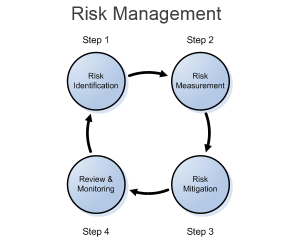
As an employer, risk management should be one of your top priorities. Simply put, risk management is the conscious handling of exposures that a business faces. Since the start of the COVID-19 pandemic, tree care owners have been addressing a new risk to their business, viral infection, and using risk management techniques to minimize the impact upon their business. The purpose of this article is to help you understand how you can utilize the risk management process to reduce the risk of transmission of COVID-19 to both your employees and your customers. If you are fortunate enough to have participated in the ISA Tree Risk Assessment Qualification training, you should be familiar with the Risk Assessment Matrix. You likely use this tool in your daily work as an arborist to evaluate risks associated with trees. Here is how the same risk assessment methodology can be used to manage the risks to your business.

Risk Identification

Let’s start by considering how COVID-19 could impact our business operations. Obviously there are many ways COVID-19 could be transmitted, but we encourage everyone to begin to identify the potential hazards and interactions that increase chances throughout your operation. In fact, OSHA requires employers to assess hazards in which an employee may be exposed. The CDC also has a hazard identification assessment that may be helpful found here. Here are four common risk identification areas to start with:

1) Employee contracts the virus, and comes to work even though they aren’t feeling well.
2) Employee is asymptomatic and comes to work not knowing they are carrying the virus.
3) Employee interacts with customer, who is carrying the virus.
4) Virus is transferred from a surface area.

Risk Measurement
The likelihood and severity of COVID-19 impacting your business is not easily defined, but very important to study. You should have an idea of roughly how much revenue you’re generating per day and be able to calculate the consequence of an infection within your company.

In some states, like Colorado, there are mandatory shutdowns that are being required for businesses that have an infection outbreak. Per Colorado’s CDHPE’s Workplace Outbreak Guidance: preventing, reporting, and mitigating outbreaks are necessary if you experience the following:
One case of infection – the affected areas are to be closed for 72 hours and disinfected
Two cases of infection in 30 days – entire facility disinfected and closed of 72 hours.
Three cases in 30 days – entire facility disinfected and closed for 14 days.

Think about the impact these mandatory shutdowns could have and use these numbers to express to your employees how serious you are about safe workplace practices. Also, consider if you could lose jobs after notifying customers you aren’t able to operate due to a COVID-19 shutdown?

Risk Mitigation

Mitigating the risk comes with two trains of thoughts.
1. How to we prevent it from happening originally?
2. If it does happen, what do we do to control it?
Using an example of having two employees in the same truck driving to the jobsite, I’m sure you can come up with some pretty simple ways to mitigate the transmission of COVID-19. Many tree care companies have moved towards having employees drive their own vehicle to avoid multiple employees in one truck cab. Simple adjustments, similar to wearing a mask when within 6 feet of another employee, can make a huge difference in stopping the spread prior to an outbreak.

Masks can lower the risk of COVID-19 infection to you, your employees, and your customers. Masks and or face coverings used at the appropriate times in conjunction with proper hygiene and social distancing can greatly mitigate much of this risk. Research shows that people who have no symptoms can spread COVID-19, so wearing a non-medical face mask or face covering helps minimize the spread of the virus.

Your company should also have a response plan in place, detailing the actions necessary for limiting transmission if an employee does test positive for COVID-19. You’ll need to know who the employee has interacted with, which area they’ve been active in, and what equipment they’ve used at the very least. Note that other employees may have to quarantine as well if they’ve been in close contact, and again consider the impact that could have on your business.

Review and Monitoring

At this point, you’ve already done a lot of the leg work. Review the effectiveness of your program and make sure you update your response program as we learn more about the virus. Moving forward, you’ll be ready if there is another wave and will not have to rely on emergency measures for similar situations.
The ArboRisk team has been very active in helping tree services with proper risk management during this time. Reach out to ArboRisk today to get help directly or visit TCIA’s COVID-19 webpage for additional guidance on policy development that is provided specific to tree care Once developed communicate the policies to all that are exposed to these risks.

And remember, the risk management process can and should be used for more than just COVID-19!

Sources(Image):
https://www.comindwork.com/weekly/2018-10-29/productivity/risk-management-process

Written by: Malcolm Jeffris, CTSP

Risk Management and Cash Reserves

Risk Management and Cash Reserves

Written by Jim Skiera

This pandemic reminded me of the childhood story, The Grasshopper, and the Ant. As the story goes the grasshopper was the free spirit who was never concerned about what tomorrow will bring and lived in the moment. The ant to the contrary was busy preparing for the onset of winter storing food and supplies to get him through tougher times. Winter comes and the ant survives because he was prepared for the worst, and the grasshopper goes hungry and dies. The moral of the story as we were taught, those who do not plan for the long term will not succeed in the long term.

The pandemic has, as I am sure you have witnessed, caused unprepared businesses to fail. A key difference of businesses that have survived rather than failed is the practice of building and maintaining a cash reserve for times like these. Just like your safety program, company policies and procedures, training, hiring practices, workers compensation and other insurance, a cash reserve should be an integral part of your company’s risk management plan. If you have a reserve in place great; if this article will help you start one immediately.

Expenses – This sounds simple, however to accurately establish the amount of reserve needed for your company, you will need to spend time determining your on-going expenses. Your accounting system should allow you to look at your expenses for the past 6-12 months. As the tree care industry tends to be somewhat seasonal in many parts of the country, pay attention to how your expenses fluctuate month to month. If you have a significant difference, for example in the spring when expenses are high gearing up for the busy season, factor that into your planning. The purpose of the exercise is to make you aware of your financial needs throughout the year.

Risk Tolerance – With a firm understanding of your expenses, then determine your level of risk tolerance. It is recommended that companies have between three and six months of cash reserves available to cover expenses for unplanned downturns, other emergencies and or growth opportunities. This may seem like an unrealistic number; however, the last three months should now make you aware it is not out of line with the current reality. The true impact COVID-19 has on the economy and your business is likely not to be known for years to come.

Next sit down with your CPA and or financial consultant to determine the right reserve amount for your business. Speak to them about setting up a plan for your company to build the reserve over time, as it will impact your short-term cash flow. If you have a reserve that has been depleted, it’s time to structure a come-back plan. Based on the severity of this crisis you may want to revisit your risk tolerance level. Consider the impacts of possible future downturns in revenue and look for unnecessary expenses that can be shed until better times return so your reserve outlasts the crisis.

Financing Options – If you are like many businesses with little to no reserve, you may need to use financing to assist you with expenses for the short term. Your banker is another important adviser to help guide you. Ask about any financing options they have available to meet your immediate needs including Small Business Administration (SBA) loans and or lines of credit. A line of credit can be more difficult to set up, as it requires your company to meet the qualification minimums established by your bank, based on their lending level of risk.

Typical requirements include:
– A list of company assets and values
– At least two years of profitable operations
– Sufficient cash flow to cover financing
– Owners who have assets to put up as collateral themselves

SBA loans are an alternative for companies that cannot meet bank loan requirements. In response to this crisis, the government has established several additional new loan programs administered by the SBA. It is likely there will be more, so having a relationship with your banker to keep you abreast of these opportunities is critical. These loans are provided by banks in partnership with the SBA. Information about applying for SBA loans can be found on-line or provided by participating partner banks.

Now is a time to think like an ant. 

To learn more about how strategic planning can enhance your organization, take a look at our Thrive Risk Management Strategic Planning Package. In just 4 short weeks we can help you identify who you are as a company, what you want to become, and what strategic milestones will be needed to achieve your goals.

Pandemic Cyber Security

PAndemic Cyber Security

One thing this pandemic is certain to do is change the way we do things going forward. We have seen companies from all industries and sizes adapt the way their employees work to ensure they can stay afloat through this crisis. Perhaps your office employees are working from home with a laptop, or maybe you’ve cut all face to face interactions with clients. Either way, the exposure for cyber risk has already skyrocketed.

We’ve been talking about cyber exposures for a number of years now. Whether it be misinformation, a phishing email coming from your businesses email, or a hacker locking up your network and holding it for ransom, the number of attacks on businesses has grown exponentially.

Below are five quick tips on how you can limit your business’ risk of being victim to an attack:

1) Passwords:
First of all, don’t make your password something along the lines of SeasonYear!, as even I could guess that. Make it something more difficult like best NFL team (Packers), year, exclamation point. That is what I do and it works great (only kidding). In all seriousness, you need to make sure you, and your employees, are using complex passwords for any login that may have personal, company, or client information on it that could be valuable. I suggest using password savers like Roboform or Dashline to make sure passwords are updated and not forgotten. Also try to enable two factor identification as often as possible.

2) Out-Bound Emails
Emails are common places, if not the most common, for an attack to occur. Especially for a business like a tree service. For example, my dad received an email from a tree service in his area whose G-mail account had been hacked. It mentioned the job, which was actually just finished at my dad’s house, and where to send money. The only reason my dad caught it was because the amount was different from what they had originally discussed. Imagine if your email was hacked and clients sent you personal information, banking info, etc. You’d be on the hook for any damages, defense costs, credit monitoring for the client, and much more. Make sure your email is secure and that clients have a clear understanding of what type of things you would or would not ask for via email. And check with your insurance agent to see if you have cyber coverage. If not, I’d strongly recommend it as it is not very expensive and offers high limits!

3) In-Bound Emails
Are your office staff members and employees trained on what to be aware of when receiving emails? Follow these tips to be safe:

A. Make sure you have a good filter for blocking out spam emails. We work closely with an IT security company and we still see some slip through every once in a while.
B. Verify the sender before opening the email, and definitely before opening any attachments!
C. Hover over hyperlinks and make sure the URL matches the source. Look closely for any typos or odd spellings.

4) VPN
If you have employees working from home or working remotely, I encourage you to look into Virtual Private Networks (VPN’s). This would often come into play for anyone working out in the field that may connect to a public network. Employees could stop at a restaurant and connect to their wifi, or go to a conference and work from the hotel. When connecting to a public wifi spot, employees are at risk of connecting to a fraudulent network that imitates the network they think they are connecting to. Employees could also connect to the original network which may have been breached, allowing attackers to obtain information during your employee’s use. Check out VPN’s like ExpressVPN or Surfshark and make sure to consider the number of devices and frequency of use before purchasing.

5)Watch Out for Spoofs
People are desperate for new information right now. We want to know what updates there are regarding COVID19 and how it impacts us and our business. Consider that times like these mean we are most vulnerable to attacks and misinformation. Try to be conscious of where you’re gathering information and make sure it is from credible resources like the World Health Organization (WHO) or the Centers for Disease Control(CDC). Consider that emails, pop-ups, etc. for “COVID19 Update!” may be click bait and encourage those in your company not to jump to conclusions.

The World Health Organization recently stated they were also in the middle of an ‘Info-demic’ due to the large spread of misinformation regarding COVID19. As the employer, it is your responsibility to provide your employees with the correct information. Utilize resources such as WHO, CDC, TCIA, and ISA, to get relevant information throughout the pandemic. As always, feel free to reach out with any questions and we’ll see what we can do!

Written by: Malcolm Jeffris, CTSP

Employee’s Personal Vehicle for Work

Employee’s Personal Vehicle for Work

One of the largest exposures your field workers have to contracting a communicable disease is spending time in the same vehicle with someone who is contagious while riding to and from the jobsite. The close quarters inside the cab of a truck make it very easy for an infected person to unintentionally transmit a virus to their co-worker.

Because of this many tree services have begun to allow employees to drive their own personal cars and trucks during the work day.

While this risk control measure is great for reducing the risk of spreading an illness, it creates other liabilities to the tree care business that needs to be managed. Below, I have outlined the additional concerns a tree care company must consider to address to successfully implement a “Drive Your Own Car Policy”.

For the Employee
In the vast majority of states, their personal auto insurance policy will be the primary policy in case of an accident. Meaning:
It is also the only policy that will pay for damage to their car. Their limit of liability is very important, as this limit is what initially will be used to pay for any injuries or property damage they cause to others.
If they use their personal vehicle regularly for work purposes, they should talk to their auto insurance company to make sure coverage is there for ‘business use’. Without their insurance company knowing about the use of the vehicle for work, there may not be coverage for an accident.

For the Company
A standard business auto insurance policy does not have coverage for anything that happens with non-owned vehicles. A tree service must add Non-Owned Auto liability coverage to provide liability protection if your company gets sued due to an accident by an employee with their vehicle while on company business. This is most likely going to be secondary coverage that pays after the employee’s personal auto policy limits are exhausted.

A business auto insurance policy does not and cannot provide coverage for physical damage to the employee’s car.

Management Best Practices
Know the driving record of the employee that is asked to drive their personal vehicle for work purposes. This is no different than analyzing if an employee can drive a fleet vehicle for the company based on their driving record. (Contact ArboRisk to get a copy of our MVR Guidelines to determine if you would like them to drive or not).

The tree service should get a copy of each employee’s personal auto insurance policy to prove coverage is in place and review their liability limits.
A minimum limit of liability that an employee is required to carry on their personal auto insurance policy is important. (We recommend requiring, at minimum, $500,000 coverage per person, but check with your state’s Wrongful Death Act regarding the minimum lawsuit for a minor’s death. Use that as a guideline for setting your limit.)

Decide whether or not the company will pay for repairs or deductibles associated with breakdowns or accidents that happen while on work time.

Inspect the employee’s vehicle for any safety issues before allowing that employee to drive for work.

Decide how the company will reimburse for expenses, either using the IRS guideline for mileage or another way that is better suited for the company.

Create a written policy that outlines all of the requirements and responsibilities of both the employee and the company.Allowing employees to drive their personal vehicles on the clock can be a very critical risk management move during the midst of a community wide outbreak, however, the tree care owner must ensure that proper steps are taken not to create a larger liability to the company when doing so.

Written by: Eric Petersen

Coronavirus and Insurance Claims

Coronavirus And Insurance Claims

With all of the attention that the coronavirus (COVID-19) is getting, many tree service owners have asked us if they could be held responsible in any way if their employees or customers were to become infected. The answer really depends upon the specific circumstances of the infected person, but let’s take a deeper look at insurance coverage and illnesses.

To start, let’s discuss how flu epidemics are treated in contrast to location-specific illnesses like E. Coli or Salmonella. An outbreak of Salmonella can often be traced back to an exact source of contamination. This allows the local health department to take action against the company who harbored the bacteria. Depending on the facts surrounding the outbreak, the business could be liable for any illnesses or deaths associated with the outbreak. There are custom insurance coverages available to protect businesses that can be purchased, however, this is much more common in the food service and hospitality industries than the tree care industry.

Now during a flu epidemic, where someone could pick up the virus almost anywhere, it is near impossible to connect the contraction of the illness to a particular business or location. Therefore these events are unlikely to trigger a liability to your tree care company.

What we know about the coronavirus is that it is spread from person to person like the flu. The new known cases rarely have any connection to a specific location or source of infection, consequently the claims analysis for an infected coronavirus person would be handled similar to that of the flu.

In regards to Workers’ Compensation, a coronavirus infected employee could make a successful claim, however, there needs to be a very specific set of circumstances. In most states for a workplace illness to qualify as a Work Comp claim, it must be proven that the employee was subjected to a unique environment that is not common to the general public. If that unique environment was a known location to have a coronavirus outbreak and the employee was sent there to perform their work duties and they contract the virus, they could claim the illness on Work Comp.

In summary, despite the real fear of a widespread coronavirus pandemic, there will most likely not be business insurance coverage available to infected persons. Take all precautions to limit exposure to the virus, just like you would the flu and make contingencies for your office team to work remotely if possible to limit the spread throughout your organization. If you have a specific employee contract the virus and are concerned it may qualify for Work Comp, turn it into your insurance company right away and let them investigate it.

According to the Centers for Disease Control (CDC), here are some tips to minimize the impact of the coronavirus.

Ensure sick employees stay home and are symptom free for at least 24 hours before returning to work.

1. Be flexible with your sick leave policy and make sure employees know what they are expected to do when sick.
2. Educate employees on proper self-hygiene, like washing hands and covering your mouth during a cough or sneeze.
3. Keep cleaning supplies, tissues and hand sanitizer stocked and readily accessible.
4. Perform routine cleaning in your shop and office as well as providing disposable wipes to employees to keep their individual workstations clean.
5. Check the CDC’s Traveler’s Health Notices for travel guidance before sending an employee on business.

Written by: Eric Petersen